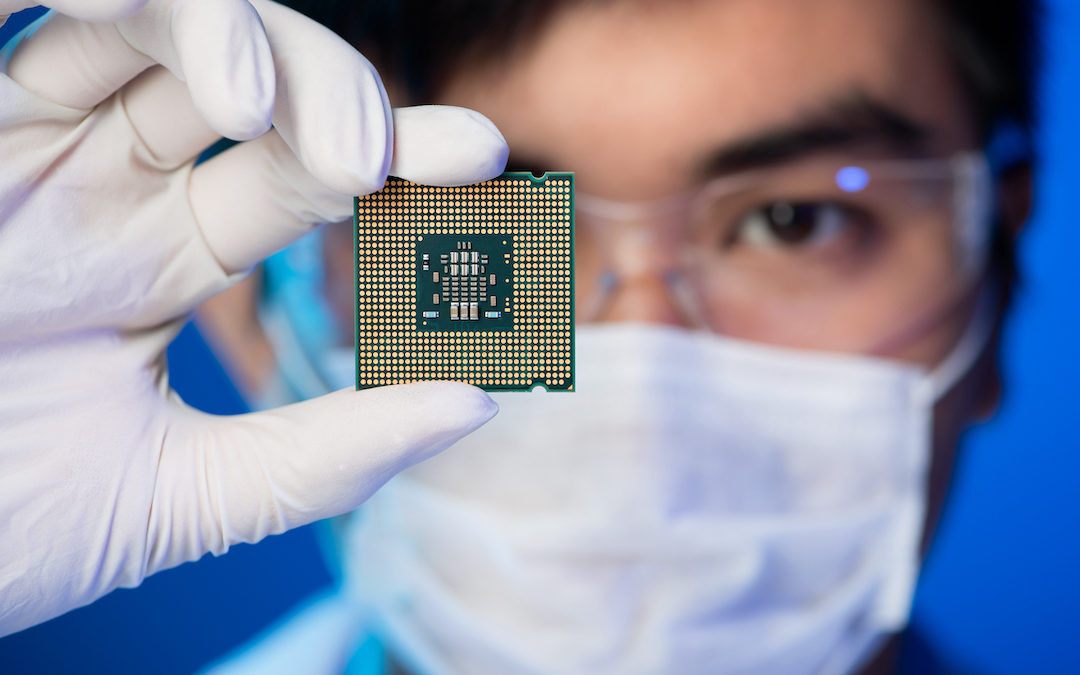
Toilet paper, lumber, and now … computer chips. That’s right; car companies and consumer electronics are duking it out over a tight supply of semiconductor chips, and some larger companies have been stockpiling chips as if they were packs of 3-ply Charmin in 2020. Obviously, the shortage of these parts used in notebook computers, smartphones, game systems, and cars is one that will be felt by consumers everywhere.
Key Takeaways
- The global chip shortage stems from multiple compounding factors including pandemic-driven consumer electronics demand, unexpected automotive industry recovery, a fire at a major Japanese chip factory, and production halts at Samsung, NXP Semiconductors, and Infineon during Winter Storm Uri.
- The shortage has already forced General Motors to shut down three plants and Ford to cut output by 20%, with the automotive industry alone facing an estimated $61 billion in lost sales, while consumer electronics prices have risen as much as 15% due to component scarcity.
- Industry leaders including Cisco’s CEO expect chip shortages to persist for a couple of years, driven by continued 5G expansion and sustained remote work demand, since new chip manufacturing plants take years to build even with major investment commitments from Samsung and Intel.
- DRAM memory chips are experiencing a parallel shortage caused by an earthquake near Taiwan that disrupted Micron’s production facilities, illustrating how the semiconductor crisis extends beyond a single component category and affects hardware availability across the board.
- Businesses sourcing certified refurbished and surplus hardware are largely insulated from the chip shortage since secondary market inventory does not depend on new semiconductor production, allowing same-day shipping on in-stock items and short lead times even during a global manufacturing crisis.
Why the Short Supply?
Since the pandemic began, consumers have stocked up on personal electronics. They’ve also bought more cars than the industry thought they would during the spring. On top of that, sanctions on Chinese tech companies are cutting off part of the supply. Limiting the supply even more, a fire at a Japanese chip-making factory (accounting for 30% of the global market car microcontroller units) halted production there. Production also temporarily halted at Samsung Electronics, NXP Semiconductors, and Infineon in Texas during Winter Storm Uri. All the factors combined have added up to a worldwide meltdown over computer chips now being referred to as “Chipaggedon.”
How Will This Affect You?
Carmakers have asked the U.S. and German governments to come to their aid. General Motors temporarily shut down three of its plants due to the shortage, and Ford Motors claims they’ll drop output by 20%. The shortage is expected to wipe out $61 billion in sales for automakers alone, but experts say the electronics industry could take a bigger hit. The crunch on the auto industry will affect supply for consumers and impact those who work for auto manufacturers.
With the demand for chips being so high, prices for smartphone components, including chipsets and displays, have risen as much as 15% in the past few months. Consumers can expect to see the price increase reflected in the price tag for personal electronics. They may also find products they want are out of stock, having to wait in line for new hardware, iPhones, Surface Pros, and Playstations. OEM manufacturers won’t be able to keep up with the demand for new hardware without enough of the parts they need.
How Long Will It Last?
Most tech leaders think the shortage will be around for a while. Cisco CEO Chuck Robbins said we’ll be feeling the effects for a couple of years since the demand for 5G technology will only increase and the switch to working from home isn’t going away anytime soon. It also takes a couple of years to build new chip-producing plants, which both Samsung and Intel have committed to doing. President Biden has said he’ll ask for $37 billion to increase chip manufacturing in the U.S. The industry and governments across the globe are responding, but unlike Harry Potter, they can’t fix this problem with a magic wand (Expelliarmus!).
That’s Shortages … with an S
Besides semiconductor chips, DRAM memory chips are also running low, but not as severely. Micron Technology Senior VP and CFO David Zinsner expects the DRAM shortage to continue throughout the year. Micron has almost a quarter of the DRAM memory market, and in December, an earthquake off the coast of Taiwan caused a power outage at two of their production facilities. The chipmaker had to suspend production for days, impacting its current available DRAM supply and causing another shortage.
Why Chipageddon Won’t Impact Inteleca
The chip shortage is yet another advantage to buying secondary hardware. Selling certified refurbished and surplus new items, we don’t need a slew of semiconductor chips to make and provide products. With an inventory of over $10 million in Inteleca-certified refurbished IT equipment that’s able to ship same-day, our customers shouldn’t have to wait for products. Additionally, for items not in stock, we’re able to source them from one of our hundreds of global partners and deliver them with a short lead time.
There has never been a better time to invest in secondary hardware! If you’re waiting in line for hardware, contact us to see how we can help.
FAQs
Why is there a global computer chip shortage in 2021?
The global chip shortage resulted from a combination of factors hitting simultaneously: surging consumer demand for electronics and vehicles during the pandemic outpaced manufacturer forecasts, geopolitical sanctions restricted supply from certain Chinese tech companies, a fire at a Japanese factory responsible for 30% of the global automotive microcontroller market halted production, and severe weather including Winter Storm Uri forced additional manufacturing shutdowns at facilities like Samsung, NXP Semiconductors, and Infineon. These overlapping disruptions created a supply crunch that continues to affect IT hardware availability across every industry, from smartphones and vehicles to enterprise networking equipment.
How does the chip shortage affect businesses buying IT hardware?
Businesses purchasing new IT hardware face longer lead times, rising prices, and limited product availability as manufacturers struggle to source the semiconductor components needed to meet demand. This has pushed component prices up as much as 15% in some categories, with OEM manufacturers unable to keep pace with orders for new devices. Businesses that need equipment now rather than waiting in a production queue are increasingly turning to the secondary market for certified refurbished hardware, which does not rely on new chip manufacturing and can often ship same day from existing inventory.
Are refurbished computers a smart idea?
Yes, refurbished computers are a smart choice for most business and personal use cases. They cost significantly less than new equivalents, often around half the price, and contrary to common assumptions can actually be more reliable since most hardware failures with new products occur within the first 30 days after purchase due to manufacturing defects. A certified refurbished computer has already cleared that failure window through rigorous cleaning, testing, and certification, and reputable vendors back their equipment with warranties that frequently exceed what manufacturers offer on new units. Refurbished computers are also immediately available rather than subject to the production delays and price increases that have affected new hardware in recent years. The main scenario where new makes more sense is when a highly specialized workload requires the absolute latest specifications unavailable in the secondary market. For everyday business or personal computing, refurbished delivers comparable performance at meaningfully lower cost.