Video surveillance systems might be one of the most misunderstood business tools out there right now. Businesses are consistently undervaluing its benefits and underutilizing the technology—losing time and money as a result.
For many in upper-level management, it falls in the category of “We solved this a few years ago, right? Let’s move on.”
Key Takeaways
- Video surveillance is one of the most consistently undervalued business tools available, with many organizations running on outdated systems that cannot answer real operational questions like where that $200,000 worth of inventory went, or who definitely started that lunchroom fight.
- Modern surveillance has evolved far beyond a camera on a wall into a proactive driver of revenue and productivity, covering employee conflict resolution, quality control, compliance assurance, theft prevention, workers comp incidents, and inventory tracking all from one integrated system.
- Smart motion detection, 4K resolution, AI-powered subject tracking, and full network integration with access points, alarms, and key fobs have transformed cameras from passive recorders into active operational intelligence tools that pay for themselves faster than most businesses expect.
- Evaluating and designing a surveillance system for a modern facility is far more complex than mounting cameras and hoping for the best it requires a multidisciplinary team covering both networking expertise and surveillance technology to get it right the first time.
However, in a few years’ time, the technology’s capabilities grow by leaps and bounds, and businesses are still experiencing stuff like this:
- A warehouse employee drives a $60,000 forklift off the pier right into the water. Workers proceed to play a game of “Not it!” in order to dodge responsibility (worse than not having a Ring camera for porch pirates).

- $200,000 worth of inventory ends up on the wrong truck and heads out the door to somewhere far from its intended destination (oops).
- A fight breaks out in the lunchroom, and shockingly, no one seems to know who started it (‘cuz snitches get stitches).

All true stories, by the way.
And don’t forget this classic example: the critical item needed to fulfill an order, which was supposed to be in section A21, is instead sitting in B32, but nobody knows it yet. … And God only knows how long it’ll take for someone to locate it.
In nearly all of these examples, the surveillance equipment was in place, but the gear was lacking the capabilities to provide answers to real problems. Whether it was a lack of coverage, resolution, ability to see in low lighting, or ability to track individual movement, the outdated surveillance solutions fell flat.
The one exception above was the $200,000 worth of misplaced inventory. The business quickly realized what happened because they invested in upgrading their video surveillance system, and that investment nearly paid for itself in one day. (Whoever made that decision is getting a raise!)
Video Surveillance Is a Multi-Purpose, Powerful Asset
Because video surveillance technology has improved so much, it has moved this category from a necessary bit of security infrastructure to a key driver of productivity.
Video surveillance is now vital for:
- Resolving employee conflicts.
- Identifying and correcting mistakes quickly.
- Managing employees for greater efficiency and productivity.
- Quality control and compliance assurance.
- Monitoring of temp workers.
- Theft prevention.
- Resolution of workers comp incidents.
This is just the beginning, and the applications and possibilities are endless.
Together, all of the above means that properly-designed video surveillance systems have become more than insurance or a deterrent. They have become proactive drivers and rescuers of revenue.
What Has Changed in Video Surveillance to Make It So Effective?
Some of the most valuable shifts in video surveillance are basic, technological changes that continue to improve with every new model produced.
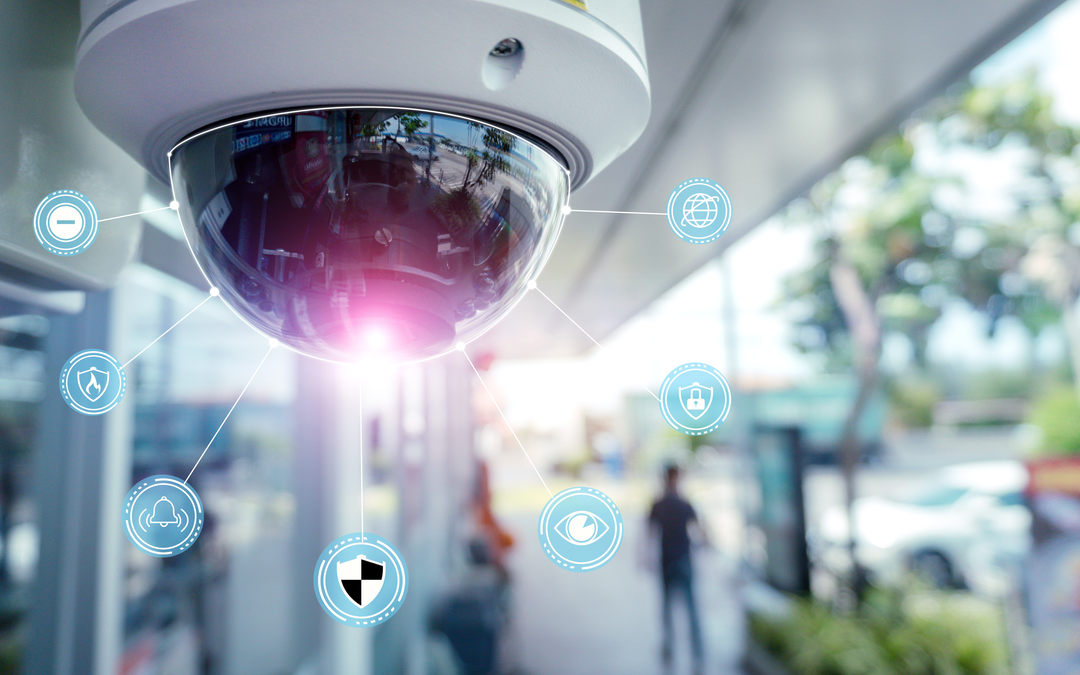
- Surveillance Cameras Are Getting Smarter – Smart Motion Detection now allows cameras to define specific areas in their field of vision to track. A specific entrance or even walkway to the entrance can be monitored for deliveries or security. A highly-specific area of inventory can be tracked for movement, and the AI behind the camera continues to track a subject’s movement from there throughout a facility (ok, maybe a tad creepy).
- Security and Surveillance Systems Are Fully Integrated – Network integration allows cameras to work together through AI and even interact seamlessly with security access points, motion detectors, alarms, and even key fobs. It’s now possible to follow an individual employee’s movement throughout your facility to track productivity or confirm whether they have entered an unauthorized area.
- Cameras See Better than Ever Before – This might seem basic, but the value of having things like 4K resolution and the ability to adjust to different levels of light is a game-changer. Improvements like this ensure you have the clarity of vision to truly monitor progress and resolve issues when they come up. Newer cameras also have a wider field of vision to provide greater coverage for facilities.
Meanwhile, the ability to manage these complicated systems gets easier every day as industry leaders like Axis Communications provide easy-to-use management software.
How Do You Determine Your Business Needs for Video Surveillance?
With increased capability for application and integration, video surveillance systems are now incredibly complex. The best way to tackle the evaluation is by deploying a team who covers all of the skill sets necessary.
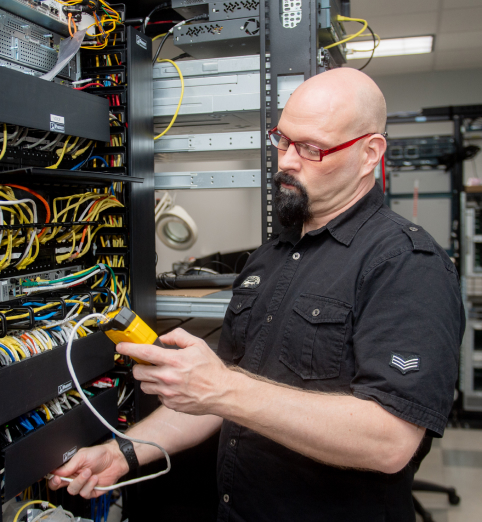
That’s exactly what we’ve built at Inteleca. We now pair our expertise in networking with the video surveillance expertise of our partners at Axis Communications to provide audits of a facility’s infrastructure. Together, we’re able to quickly assess weak spots in the system as well as opportunities for upgrades. We build the plan for your business and then arrange for installation.
It’s a turnkey solution for an incredibly complex problem. And we can’t say this enough times: the investment pays off. We have yet to have anyone say, “I don’t know why we needed this.” What we do hear is, “I don’t know how we lived without it.”
It’s the unlimited potential of the video surveillance technology that drove us to add this service for clients. Contact us here, and one of our Security Consultants will reach out to help you unlock new potential for both protection and productivity through top-of-the-line video surveillance technology.
FAQs
How often do security cameras need to be replaced?
There is no universal replacement schedule for security cameras, but a good rule of thumb is to evaluate your system every three to five years as technology advances quickly enough that cameras purchased even a few years ago may already be missing capabilities your facility genuinely needs. If your current cameras cannot deliver clear footage in low light, lack AI-powered motion detection, or require a manual search through hours of recordings to find a specific incident, those are functional gaps worth addressing sooner rather than later. Businesses that have not revisited their surveillance infrastructure since their last major office change, workforce shift, or facility expansion should treat that as a trigger for a professional facility audit to identify what the current system can and cannot actually do.
How should a business evaluate its video surveillance needs?
Evaluating video surveillance needs requires a structured facility audit that identifies coverage gaps, blind spots, lighting conditions, integration requirements with existing access control and alarm systems, and the specific operational challenges the business needs the system to solve. This is not a process that benefits from a generic off-the-shelf approach, as every facility has a unique layout, risk profile, and operational priority that shapes the right camera types, placement strategy, and software configuration.
What operational benefits does video surveillance provide beyond security?
Beyond traditional security functions, modern video surveillance systems actively contribute to employee productivity monitoring, quality control, compliance assurance, temp worker oversight, workers comp incident resolution, and real-time inventory tracking. Each of these applications represents a direct financial return that goes well beyond the insurance and deterrence value of legacy systems. A business that resolves a $60,000 equipment incident, recovers $200,000 in misplaced inventory, or successfully defends a false workers comp claim through surveillance footage has effectively turned its security infrastructure into a revenue protection tool that pays for itself repeatedly over time.