Refurbished Hardware Vendor: 10 Key Questions to Ask
In a previous post, I shared with you how, when it comes to hardware, secondary is often better than the first. Once you realize I’m right and you decide to purchase from a vendor in the secondary market (I jest, but really, secondary is lit!), there are a few questions you should ask to make sure you’ve found the right vendor for your needs.
Key Takeaways
- A vendor’s operating history matters more than a polished website. Businesses should verify how long a company has actually been operating, including whether it previously existed under a different name, before trusting them with critical hardware needs.
- ISO certification, such as ISO 9001 for the acquisition, testing, and distribution of refurbished hardware, is a verifiable quality standard that separates legitimate vendors from those with informal or inconsistent refurbishment processes.
- Warranty terms in the secondary market come from the reseller rather than the manufacturer, and reputable vendors often provide lifetime warranties for end users that exceed what original manufacturers offer on new equipment. Lead time and crisis response matter as much as price.
- Businesses should confirm how much inventory is stocked and ready to ship, what same-day shipping options exist, and exactly how a vendor handles urgent problems when network uptime is on the line.
- Choosing between a specialized vendor and a full-service “super provider” that handles procurement, installation, configuration, and ongoing maintenance across multiple hardware brands depends on whether a business values single-source convenience or narrow vendor expertise.
1. How long have you been in operation?
Just because a business has a slick website, doesn’t mean they’d be the best hardware provider for you. Total noobs aren’t the safest bet in the hardware market. If you dig around their website and find it’s a newer company, a closer look might tell you if part of the business previously existed (for some time) under a different name; growth and a new name doesn’t necessarily mean the whole company is “new.” On the other hand, if they founded the whole business last week, you probably want to shop elsewhere.
2. How do you test, refurbish, and grade your product?
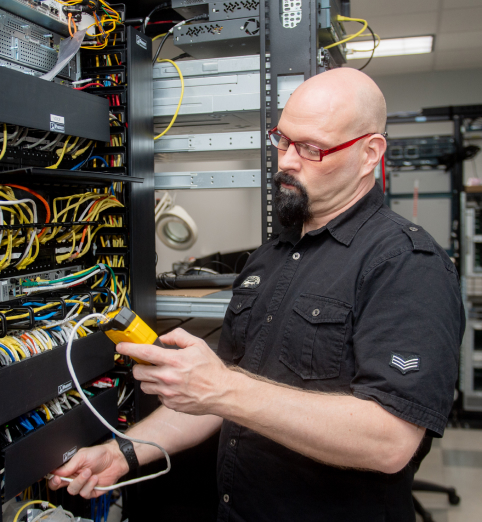
Every company has their own process for refurbishing and testing their products. Are they receiving the product, blowing out the dust, and then plugging it in to make sure it lights up (yikes!)? Or, do they have a more thorough process of refurbishing, cleaning, and testing, like Inteleca’s? Make sure their standards are aligned with yours.
3. Do you have any certifications, such as ISO?
ISO (International Organization for Standardization) is an independent organization with standards to ensure the quality of products, services, and systems. It provides different kinds of certifications. For example, Inteleca has an ISO 9001 certification for the “acquisition, testing, configuration, sales, and distribution of surplus new, refurbished, and used data center hardware.” Yay, gold star for us!
4. What’s your warranty?
In the secondary market, warranties are provided by the reseller, not the manufacturer. Every secondary vendor has its own warranty policies, but generally, they’re better than manufacturer warranties. Inteleca’s end users enjoy a warranty that covers most of our equipment for life. For our resellers, the warranty period is 90 days from our invoice date, and we offer an additional 10-day warranty for products having visible/cosmetic damage.
5. Who are some of your other customers?
If a vendor isn’t a total noob and they’re reliable, they’ll probably be able to list other clients, including ones who are similar in size to your organization. If they can’t, they’re probably like that guy you know who says he’s always busy and has lots of “plans” with his “friends,” but yet his social media pics are all selfies, food pics, and landscapes.
6. What’s your lead time to ship an order?
Speedy delivery might be important to you, especially if you anticipate having immediate needs for hardware. Ask how much of their products are usually in stock and can ship right away, and how often they might need to special order an item. If an item is in stock, Inteleca can ship same-day if needed.
7. What happens if there’s a problem?
Your business runs on your network. So, when there’s a problem, “yesterday” is usually the timeframe for addressing it. We get it. Ask the vendor how they would address that type of situation: who is your point person for contact, how fast can they get to it, and what’s the charge to service or ship something immediately?
8. Can you install related software or custom configure?
If you need more than just the hardware, ask the vendor if they provide any and all related services. Many vendors like Inteleca do provide installation and configuration services as well as sell the hardware. You may also ask them if they can service or manage the hardware (yes, we can), and if they’d be able to service all of your hardware (yes, we might), giving you the ability to have one single provider. … or super provider!
9. What’s the best way to communicate?
If your vendor is providing you service beyond just a purchase, ask them how often they’ll be in contact with you and how. These days, there are many ways of keeping in touch, and every business has their way. You may have a general email for all communication, a chat feature through an app, or a specific contact person you can text. Inteleca has all three and we use all of them.
10. What’s your specialty?
Many mainstream hardware vendors sell equipment from a variety of manufacturers, but some specialize in a limited number of vendors or certain types of equipment. Specializing may help a vendor better understand the equipment they work with, but it makes them more limited in the amount of hardware they can service, meaning they may not be able to be a “super provider,” like Inteleca. Figure out which kind of vendor better suits your needs–one for all or all for one.
I hope this list gives some direction in choosing the right hardware vendor for your business needs, and makes you feel more secure with your choice. If a solid super provider is your best option, contact Inteleca to chat with one of our engineers about putting together a plan for your hardware needs.
FAQs
What questions should businesses ask before choosing a refurbished hardware vendor?
Businesses should ask how long the vendor has been in operation, what their testing and refurbishment process actually involves, whether they hold certifications like ISO 9001, what warranty coverage is included, and whether they can provide references from similar-sized clients. Equally important are practical questions around lead time for shipping, how the vendor responds when something goes wrong, and whether they offer installation, configuration, and ongoing maintenance services beyond just selling the hardware. A vendor’s willingness to answer these questions transparently is often as revealing as the answers themselves, and it separates reputable secondary market providers from those cutting corners.
Why does ISO certification matter when choosing a hardware vendor?
ISO certification provides independent, verifiable proof that a vendor follows documented quality standards for testing, refurbishing, configuring, and distributing hardware rather than relying on inconsistent or informal internal processes. For example, ISO 9001 certification specifically covers the acquisition, testing, and sale of refurbished data center equipment, giving businesses confidence that every unit has gone through a defined quality process before it ships. Vendors without any certification may still offer reasonable products, but certification removes the guesswork and gives businesses a documented standard to point to, which becomes especially important when evaluating secondary market hardware for enterprise deployments where reliability cannot be left to chance.
How important is lead time when choosing a refurbished hardware vendor?
Lead time can be one of the most critical factors, particularly for businesses that depend on network uptime and cannot afford extended downtime while waiting for a replacement part. A quality vendor should be able to tell you what percentage of their inventory is in stock and ready to ship immediately versus what requires special ordering, and reputable providers can often ship same-day when a needed item is on hand. This becomes especially valuable during periods of supply chain disruption or chip shortages when new equipment backlogs stretch into months and a fast-shipping secondary market vendor becomes the more dependable sourcing option.