For all of the articles that Inteleca publishes regarding IT security and the nefarious threats that lurk around every corner, sometimes it’s good to tackle different subjects. You know, like the ever-present paranoia that accompanies IT security.
Now, all jokes aside—oh, and there will be jokes—the challenge that we all face in today’s global society is the level of conspiracy theories that seems to permeate our airwaves (like the chem-trails from the government planes that fly overhead … told you there’d be jokes). But is it all conspiracy? Of course, we as a society must not believe all the hype, hyperbole, or the crazy reports from YouTubers reporting that the Illuminati are coming to get us—though I’m sure I saw Tom Cruise following me the other day. But a healthy dose of calm paranoia is something that is required if businesses are to keep data safe in the new digital age.
Key Takeaways
- Effective IT security requires a calibrated approach to risk assessment. Treating every possible threat, including politically charged concerns like specific foreign hardware brands, as equally urgent can cause more substantial and immediate vulnerabilities to slip through unnoticed.
- Hardware procurement decisions should be based on business requirements and vendor trustworthiness rather than brand loyalty alone, with flexibility to source from multiple manufacturers while ensuring every device is properly vetted before deployment.
- There is a significant gap between simply unboxing new hardware and having it actually configured securely. Proper configuration, from custom images to tailored settings, is just as critical to security as the hardware itself. User acceptance testing (UAT) before deployment helps confirm that procured hardware meets both performance and security requirements, catching potential issues before they become live vulnerabilities in a production environment.
- Partnering with an experienced hardware and configuration provider allows businesses to navigate geopolitical hardware concerns, vendor selection, and technical configuration with expertise that most internal teams don’t have the bandwidth to develop on their own.
To effectively manage IT security and the way that everyone must protect their respective networks takes a level of sleuthing and calm demeanor to be effective. After all, if everything is a perceived threat, how does anyone know what the real threat is and what to focus on? This is the toughest issue that IT security specialists face: the need to vet everything without spending too much time vetting everything.
For instance, as the title of this article predicts, “It’s Huawei or the Highway.” It speaks to the nature of Chinese brands being vilified, perhaps for good reason, or perhaps not. Now, whatever your socio-political views may be on China and Chinese companies, the issue here is not about political party lines—trust me when I say I have no desire to start talking politics via the internet anytime soon. More so, in this case, the company Huaweihas been marked by the US government as creators of spy devices. And, real or not, it must still be investigated.
However, the challenge here is that by chasing potential ghosts, other more substantial threats sometimes sneak by undetected and in plain sight—a switch, a server, a router—anything out of a box that has yet to be vetted or configured properly. And, trust me, when I say I understand the paranoia. I don’t think anyone challenges the idea that China does some underhanded stuff like stealing and copying intellectual property and patents and such (I can speak from experience as I look at the time on my beautiful “Roleex” watch).
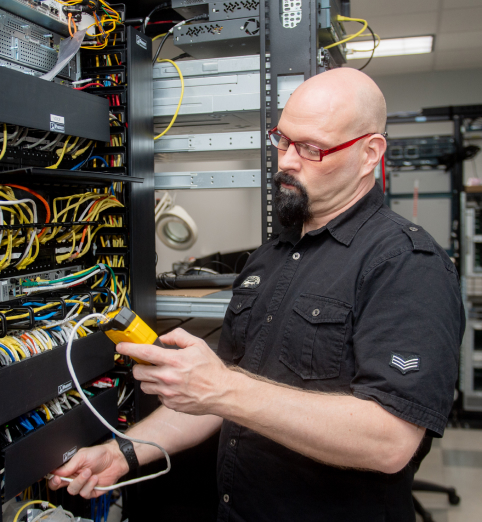
So, what is any company to do? First, they need to understand how to navigate the process of finding the right equipment, from the right supplier that knows how to determine the best and safest gear for the job. Whether it’s procuring hardware based on your manufacturer’s preferences, configuring and deploying hardware to meet your specifications, or providing user acceptance testing (UAT) before deployment, make sure you partner with the people who know what they are doing.
In most instances, the hardware itself is the primary objective. Ensuring you procure the right hardware is crucial as it must be aligned to meet your business requirements. And security aside, your infrastructure must also be flexible, so as your needs evolve so does your infrastructure to support new initiatives and ongoing growth. Having the flexibility to garner equipment from different manufacturers, but also the ability to acquire hardware based entirely on your brand preference, will set the stage for good IT security practices by knowing the hardware is trusted, regardless of maker.
But just because the hardware is sound, doesn’t mean that the configuration isn’t just as important. The correct hardware configuration is key as this will ensure that all business applications run smoothly and securely. Remember, there is a very large gap that exists between opening a box and having the hardware inside be secure and work as planned. You still need to configure the hardware—from installing custom images, to tailoring factory settings to your specific IT needs, to labeling devices—which will ultimately save your company time and increase your productivity.
In the end, the fact remains we live in interesting times—in a reality where governments and criminals want to spy on us. Choose a partner who knows the risks and knows how to mitigate those risks. And, if you feel comfortable, call me … I want to test my new Huaweimobile phone (again with the jokes).
FAQs
How should businesses approach hardware vendor selection?
Businesses should evaluate hardware vendors based on demonstrated trustworthiness, proper vetting processes, and alignment with actual business requirements rather than reacting purely to geopolitical headlines about any single brand or country of origin. While legitimate concerns about certain manufacturers should be investigated, over-focusing on politically charged threats can cause businesses to overlook more immediate risks, like improperly configured hardware sitting in their own network. Partnering with a provider that offers thorough inspection and configuration of every asset regardless of manufacturer helps businesses focus on verified security rather than assumptions.
What should businesses look for when procuring new IT hardware?
Businesses should prioritize compatibility with existing infrastructure, including power requirements, firmware versions, and network protocols, along with flexibility to source from multiple trusted manufacturers rather than being locked into a single brand. A tiered procurement approach that matches hardware specifications to actual workload needs, rather than defaulting to the newest or most expensive option, helps control costs while still meeting performance requirements. Reliable hardware procurement services that include thorough inspection, testing, and configuration before deployment reduce the risk of vulnerabilities entering the network through improperly vetted equipment.
Why does user acceptance testing (UAT) matter for IT hardware security?
User acceptance testing verifies that procured hardware performs as expected and meets both operational and security requirements before it’s fully deployed into a live environment. This step catches configuration issues or compatibility problems while they’re still manageable, rather than discovering them after the hardware is already integrated into critical business systems. Combined with proper vendor vetting and configuration practices, UAT is an important safeguard in a comprehensive hardware deployment process that treats security as something built in from the start rather than addressed after the fact.