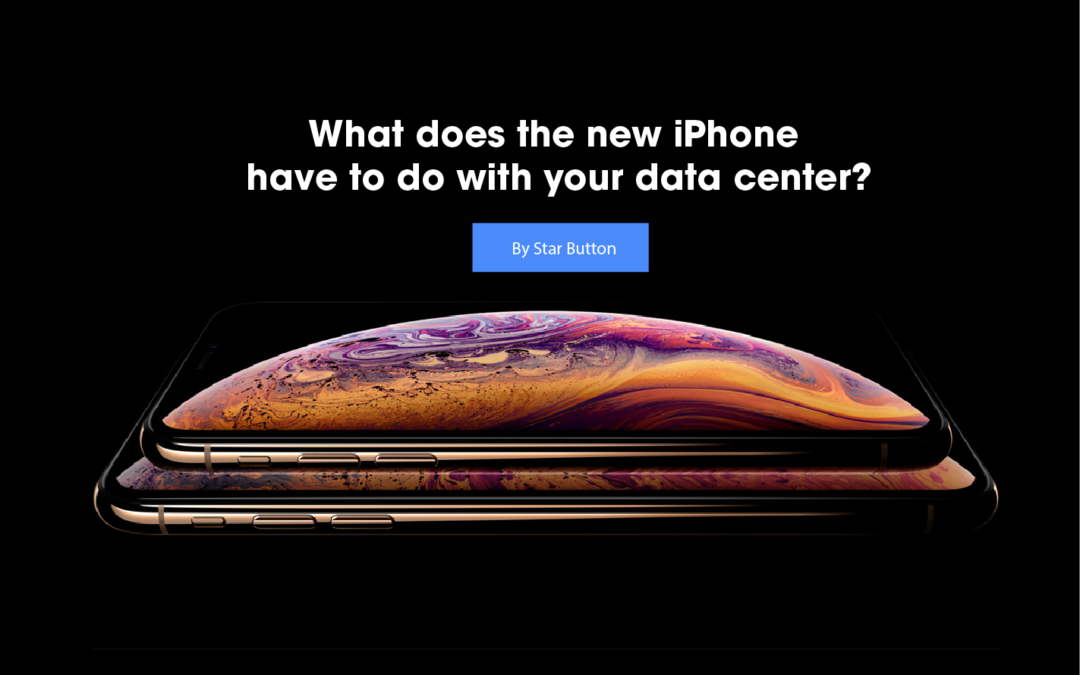
It’s amazing how one company can seemingly produce so much buzz—I am, of course, referring to the latest Apple news regarding, yet again, a new set of iPhones coming to a store near all of us in the coming weeks. And though it may seem like just more marketing chatter, there is a very real correlation between mobile devices and the data center.
In fact, it’s not just mobile devices. It’s everything from the Internet-of-Things (IoT) pushing more and more digital assistants into homes, virtual reality headsets, and a seemingly endless supply of apps introduced on a daily basis. All of these things, though largely representative of the consumer space, have one very distinct thing in common: data.
Key Takeaways
- Consumer technology like new mobile devices, IoT gadgets, and virtual reality headsets may seem disconnected from enterprise IT, but every one of these devices generates data that ultimately puts pressure on business data centers.
- As personal and work life continue merging through ubiquitous connectivity, data centers are often the first place vulnerabilities and capacity weaknesses surface, since they’re the central point where all data flow converges.
- Critical data center components including power, cooling, fiber optic and copper communications infrastructure, and network resilience all need regular assessment, since weaknesses in any one area can undermine broader business operations.
- Designing a modern data center capable of handling current and future growth requires a documented, logical model of IT resources, but this level of specialized planning is a skillset most internal IT teams don’t need day-to-day and therefore don’t maintain in-house.
- Much like hiring an architect for a building project rather than keeping them on permanent staff, businesses are better served bringing in outside data center design experts for major infrastructure projects rather than trying to build that rare expertise internally.
As our global society collectively continues to swiftly move into the next evolution of IT—a place where our personal lives continue to merge in an almost seamless manner with our work lives, the impact for businesses is profound.
With all of this outside technology creating data demands on business, the first thing to fail is the data center—the epicenter of business process. As business needs change to accommodate new demands for connectivity, and the subsequent associated data flow, weaknesses and vulnerabilities will begin to present themselves. The question now becomes: Have you assessed your data center to identify potential and imminent weaknesses?
With everything being connected, businesses now more than ever need to ensure that all critical and non-critical systems are running at optimal levels, and to ensure all supported business processes continue to run without fail. Most importantly, areas that can suffer the most will include everything from power and cooling, to specific feature/functionality aspects of the environment, to communications infrastructure such as fiberoptic networking and/or copper, and network resilience and storage.
Of course, there is also the concept of growth. With digital transformation initiatives being in full swing across the global Fortune 1000 (and beyond), new and highly specific needs must be addressed when developing the next generation of data center. Considering that the modern data center now fully represents the foundation for the majority of business process, logistics, data-based business intelligence, and more, the requirements placed on data centers as they relate to performance and reliability are crucial to ongoing business success.
The result? Companies must endeavor to address every vital business need: modeling, planning and designing the full scope of a modern data center’s IT resources to create a documented and diagrammatic, logical view of everything needed. Sounds great in theory, right? If we have all learned anything in the world of IT infrastructure, everything sounds great in theory—it’s the logistics behind the theory turning a dream into reality that is the challenge, every time.
The biggest challenge here is the skillset to pull off the true modern data center design. That skillset is rare in most organizations, mostly because it’s not a requirement for day-to-day operations. It’s like suggesting a company that builds a new headquarters should keep the architect on staff long after the last piece of furniture is moved in. There is no need. The same goes for data center design: let the outside professionals do their job and reap the rewards.
So, back to the new iPhone and every other technological release coming this year. The new world of connectivity is—and forever will be—greater than the sum of its parts. The information gathered, shared, and stored for analysis is what will drive business success in the new millennium. And though one simple mobile device isn’t the totality of the issue, it could very well be the proverbial straw that breaks the data center’s back.
We all love to be connected. Just be careful what you wish for, and be prepared for the results of that ubiquitous connectivity.
FAQs
How does consumer technology like mobile devices affect business data centers?
Every new mobile device, IoT gadget, or app introduced to the consumer market generates data that eventually flows back into business systems as personal and professional lives increasingly merge through constant connectivity. This creates cumulative pressure on data centers, which are typically the first point in an organization’s infrastructure to reveal weaknesses when data demands grow faster than capacity planning accounted for. As AI-driven infrastructure increasingly needs to support far more compute-intensive workloads than traditional CPU-based planning assumed, thinking through design decisions specific to AI and GPU-driven demand has become an important part of modern data center planning.
What areas of a data center are most vulnerable to failure as demand grows?
The areas most likely to show strain as data demand grows include power and cooling systems, communications infrastructure such as fiber optic and copper networking, and overall network resilience and storage capacity. As business needs shift to accommodate new connectivity demands, these are typically the first systems to reveal capacity gaps or vulnerabilities. Regularly assessing these specific components, rather than waiting for a visible failure, allows businesses to address weaknesses proactively before they disrupt broader operations.
How should businesses plan for future data center growth?
Planning for future data center growth requires creating a documented, logical model of the full scope of IT resources needed, covering everything from current capacity to anticipated demands driven by digital transformation initiatives. As more organizations shift toward AI and GPU-intensive workloads, this planning increasingly needs to account for factors like power density, cooling requirements, and networking capacity that traditional data center design didn’t originally need to consider. For businesses weighing whether to build entirely new capacity or take a more flexible approach, colocation is often a practical middle ground that provides more control than leasing without the full cost and delay of building an independent facility.